 F-14/15, Orbit Mall, Civil Lines, Jaipur-302006
 support@thetaxheaven.com
F-14/15, Orbit Mall, Civil Lines, Jaipur-302006 support@thetaxheaven.comImages move fast online. Screenshots, reused visuals, archived photos, half-finished assets—they all pile up. Somewhere in that mess, watermarks start getting in the way. Sometimes you own the image, sometimes you’ve lost the original file, sometimes you just need a cleaner version to work with. That’s where AI-driven tools quietly step in and save time.
Watermarks used to feel like a final lock. Now they’re more like a temporary obstacle. As visual content circulates across teams, platforms, and years, the ability to clean an image without redesigning it from scratch has become part of normal digital work, not a niche trick.
A lot of images in use today weren’t created yesterday. They come from old campaigns, discontinued tools, freelance handoffs, or stock platforms that are no longer in the picture. Rebuilding those visuals often costs more time than they’re worth. A reliable way to remove watermarks allows teams to reuse assets responsibly and efficiently, especially when the underlying rights are already clear.
Traditional editing can hide a watermark, but rarely removes it cleanly. Clone tools blur textures, content-aware fill leaves artifacts, and repeated edits degrade the image. The result might look acceptable at first glance, then fall apart on larger screens. This is where AI-based approaches start to feel less like automation and more like restoration.
AIEnhancer is built around the idea that removal should respect the image itself. Instead of simply covering a logo or text, the system analyzes surrounding pixels, patterns, and structure, then reconstructs what should logically exist underneath.
The first time you encounter a true AI-based solution, the difference is subtle but important. A dedicated watermark remover doesn’t just erase visible marks; it predicts missing detail. Textures continue naturally, edges stay sharp, and backgrounds don’t collapse into smudges. The goal isn’t perfection in theory, but believability in practice.
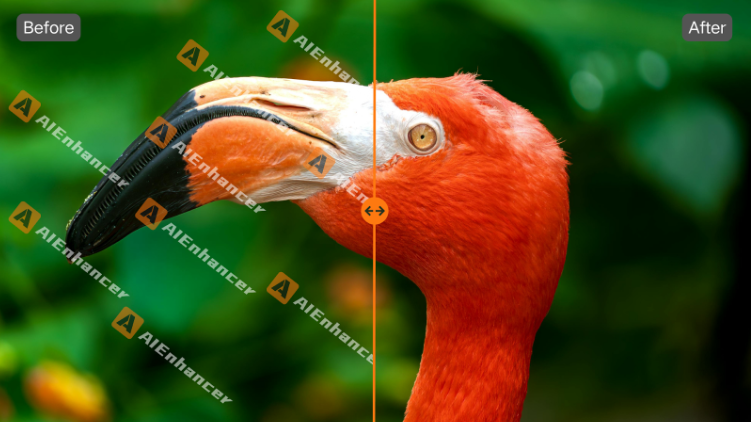
One common fear is that removing a watermark will flatten an image. AIEnhancer avoids that by prioritizing local detail. Hair strands, fabric grain, and background gradients are reconstructed rather than blurred away. The watermark remover works quietly in the background, leaving the image looking like it was never interrupted in the first place.
There’s also the human factor. Waiting ten minutes for an export breaks momentum. AIEnhancer processes images quickly enough that watermark removal feels like part of editing, not a separate task. That speed encourages experimentation, which is often where better visual results come from.
The value of a watermark remover becomes clearer when you stop thinking in terms of tools and start thinking in terms of scenarios. Most users don’t wake up wanting to remove watermarks; they want to finish something.
Creators often reuse visuals across platforms, resizing, cropping, adjusting tone. A leftover watermark can disrupt brand consistency or simply look careless. With AIEnhancer, watermark remover functionality becomes a cleanup step before publishing, not a roadblock that forces compromise.
For businesses, especially e-commerce and media teams, image libraries grow faster than guidelines. Old watermarks from previous vendors or platforms can linger for years. Applying a watermark remover across selected images helps standardize assets without restarting entire shoots or redesigns.
Old photos often carry stamps, dates, or platform marks that were never meant to be permanent. Removing those elements carefully brings focus back to the moment itself. In these cases, a watermark remover isn’t about polish, it’s about respect for the image’s original intent.
Removing a watermark is often the first step, not the last. Once the image is clean, users usually want to adjust framing, style, or content. That’s where AIEnhancer’s broader editing ecosystem comes into play.
Within AIEnhancer, users can move from cleanup to transformation using the built-in AI image editor. After uploading an image, selecting a model, and choosing an output ratio, a simple prompt can reshape the visual while preserving its core elements. It’s not about replacing design tools, but about accelerating early-stage decisions.
What stands out is how these tools stay modular. The watermark remover doesn’t force you into the editor, and the editor doesn’t assume you need watermark removal. That separation keeps workflows flexible, which matters when different teams or individuals approach the same image with different goals.
There’s an irony here. The more advanced the AI becomes, the less it feels like a machine made the decision. A good watermark remover doesn’t announce itself; it disappears.
Many AI tools fail by doing too much. Over-sharpening, artificial textures, or overly smooth surfaces give away the process. AIEnhancer’s watermark remover aims for restraint. The image should look finished, not filtered.
Users tend to trust tools that behave predictably. When the watermark remover produces similar quality across different images—portraits, products, landscapes—that trust grows. Over time, it becomes part of the default workflow, not a risky last resort.
Timing matters more than it seems. Removing a watermark too early can lock you into an image version you’re not ready to commit to. Removing it too late can complicate final exports.
When watermark removal happens early, the image becomes more flexible. Cropping, color grading, and resizing all behave better without interruptions in the visual field. Many users prefer to run the watermark remover right after upload, before any other adjustments.
In other cases, users wait until composition is finalized. This ensures the watermark remover focuses only on visible areas, preserving processing power and avoiding unnecessary reconstruction. AIEnhancer supports both approaches without friction.
As AI editing tools evolve, watermark removal will likely become expected rather than exceptional. The difference will lie in how invisibly it works.
AIEnhancer treats the watermark remover as foundational infrastructure, not a flashy add-on. That philosophy shows in the results. Images remain images, not demonstrations of technology. And in a world saturated with visuals, that restraint might be the most advanced feature of all.


 Register & Login